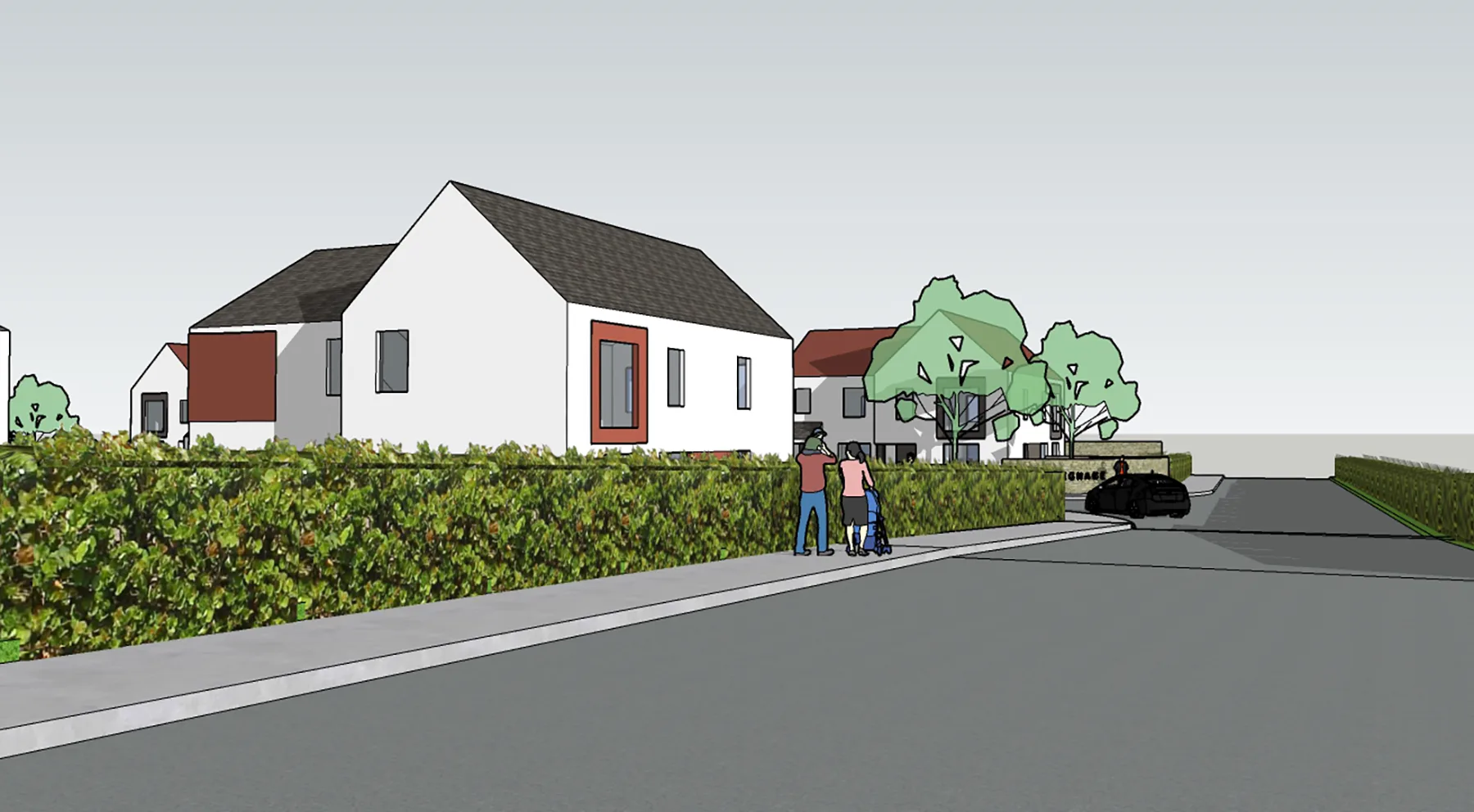
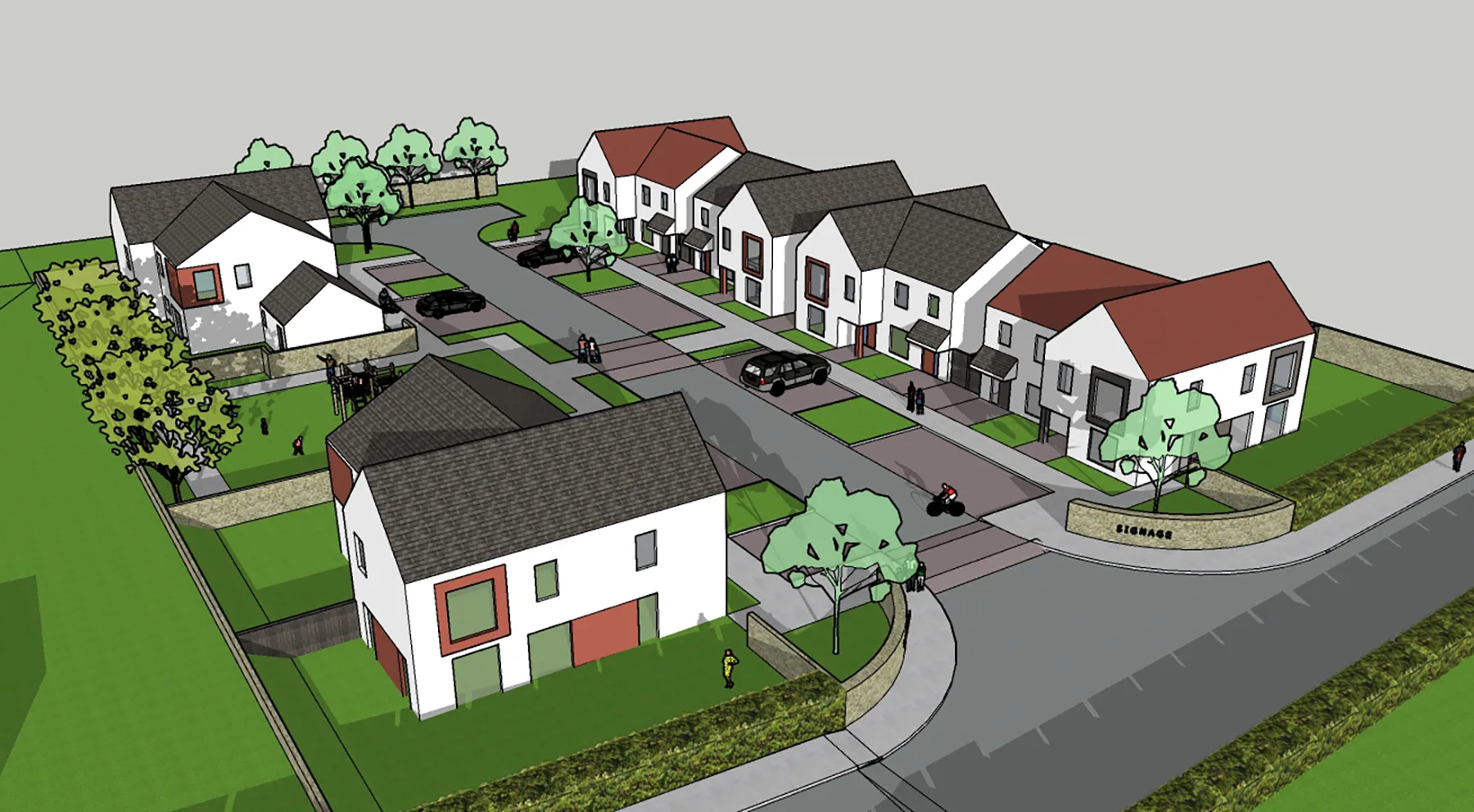
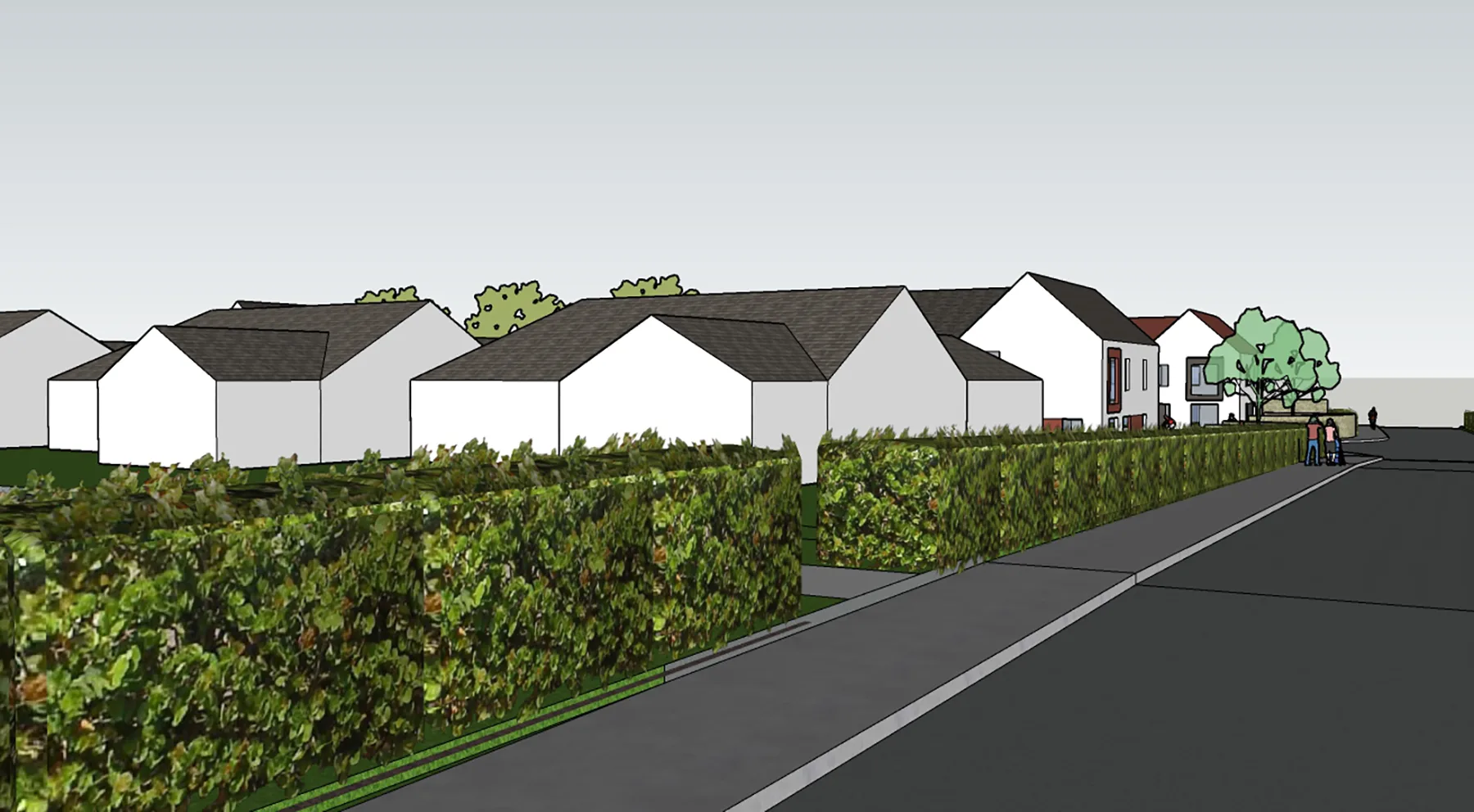
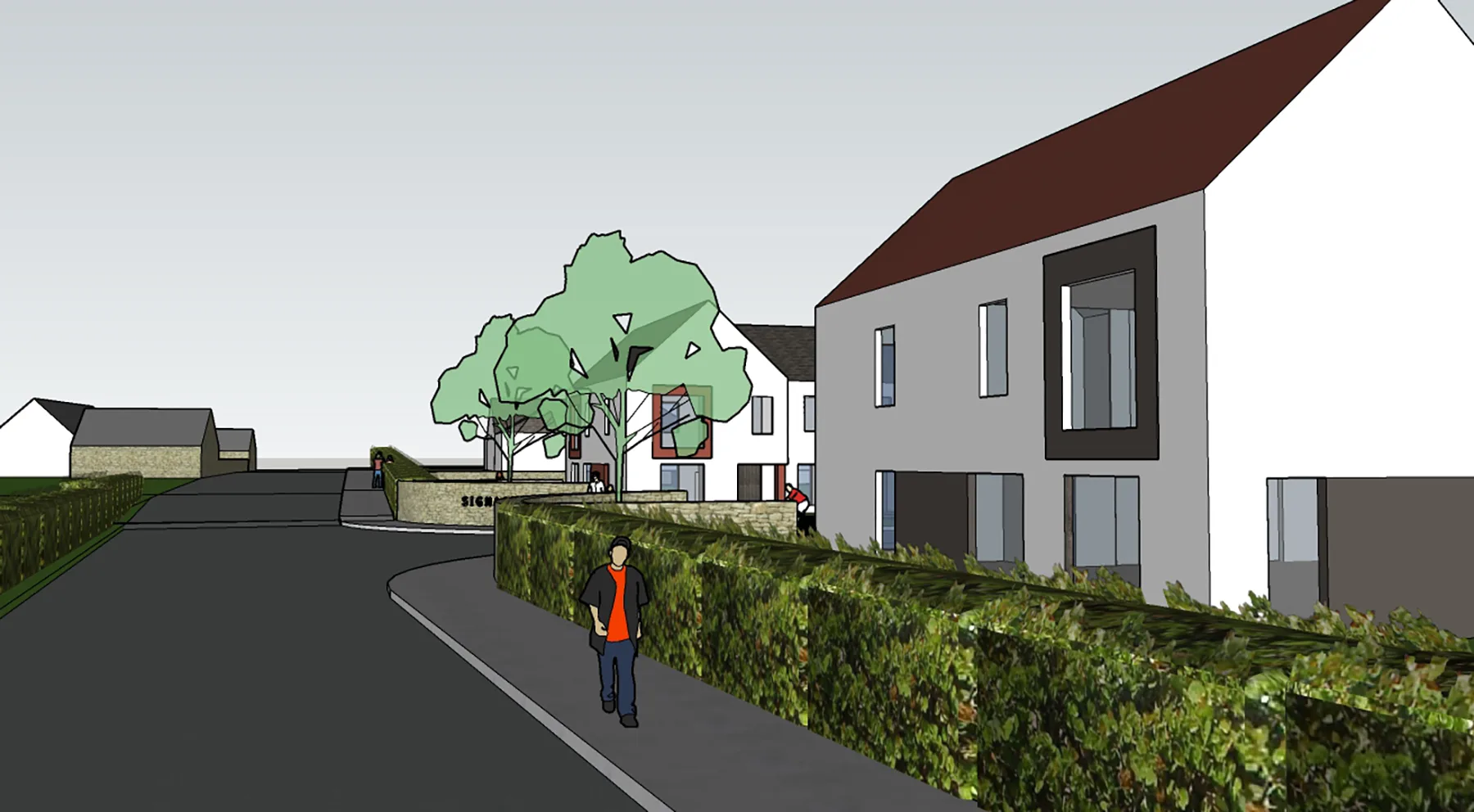
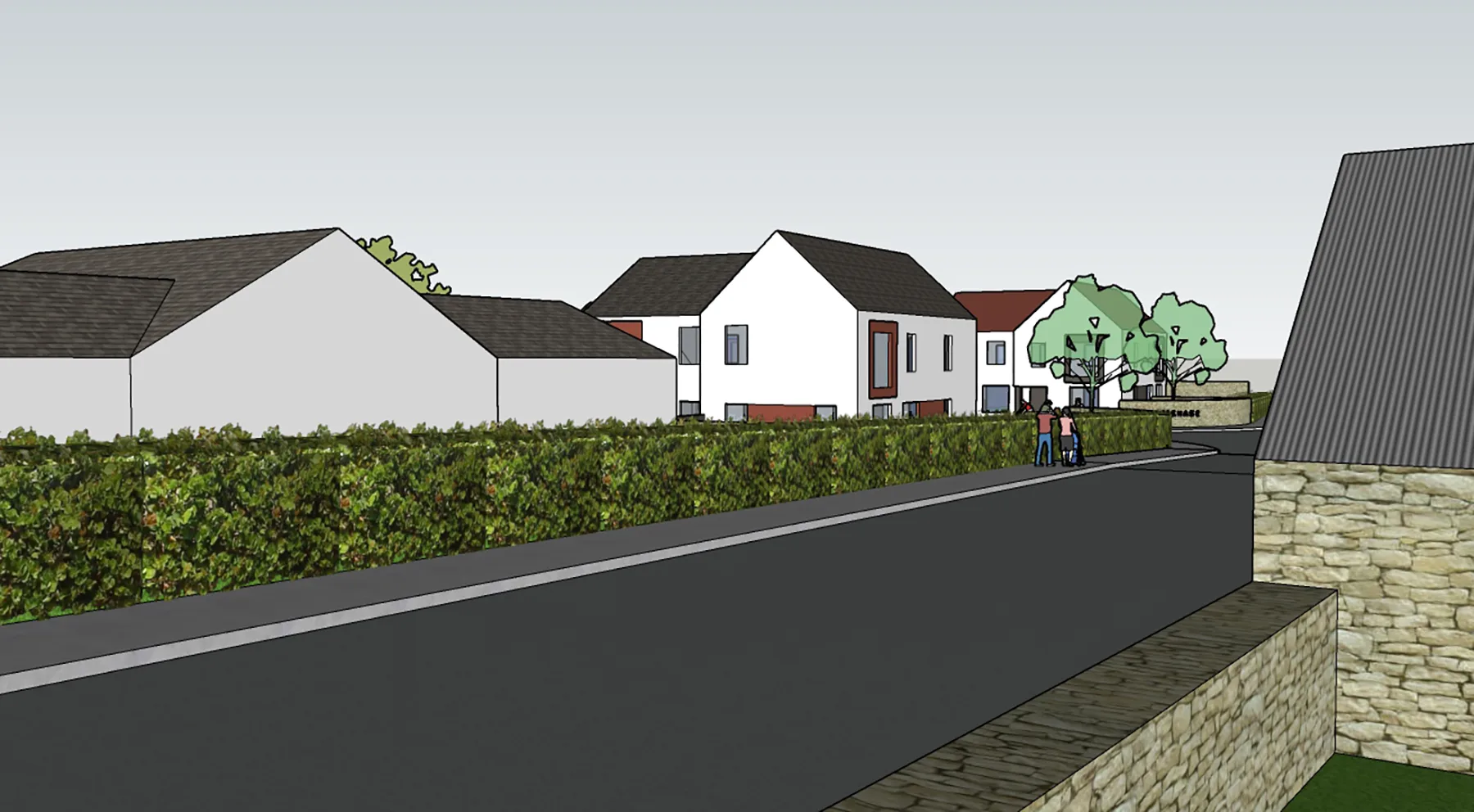
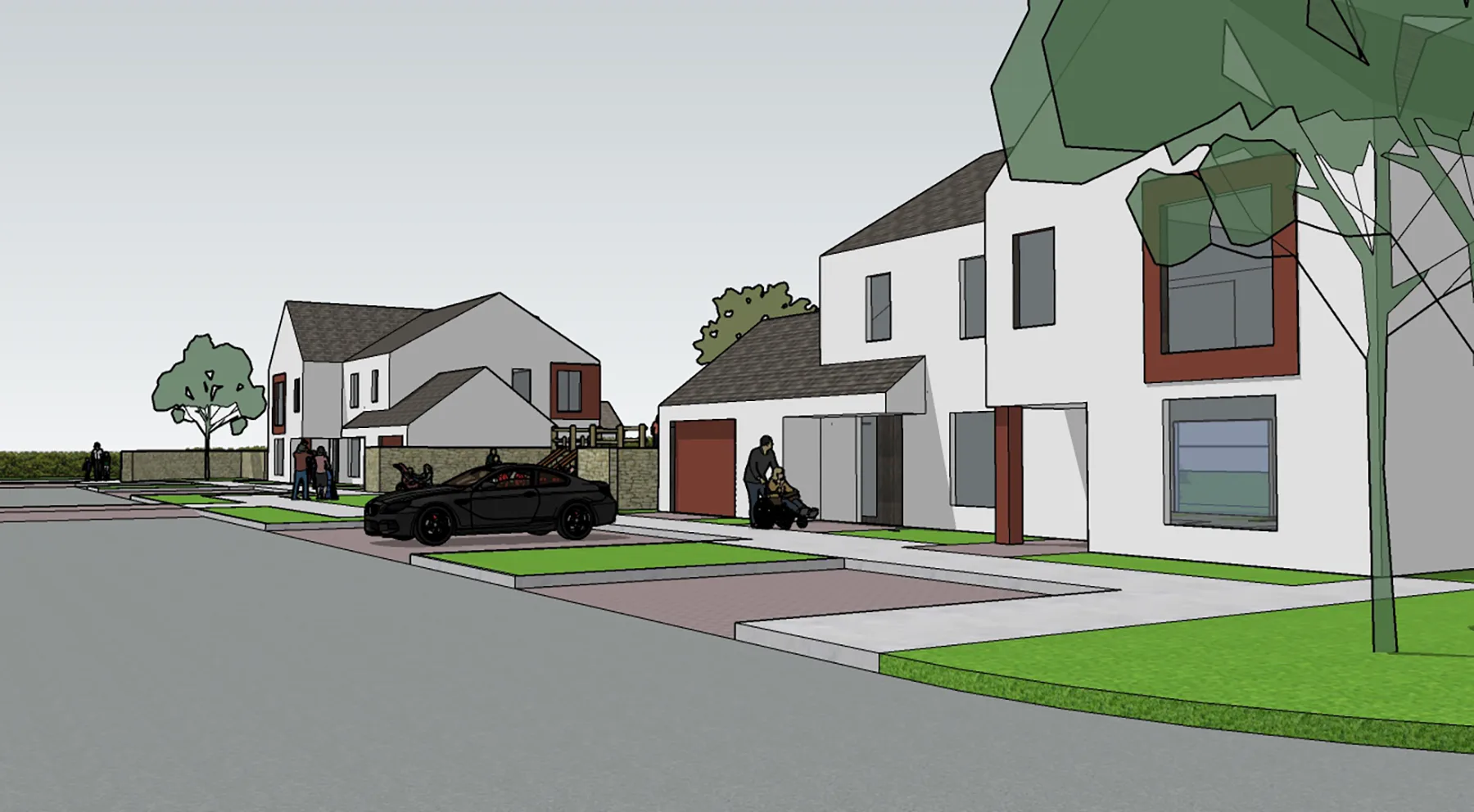
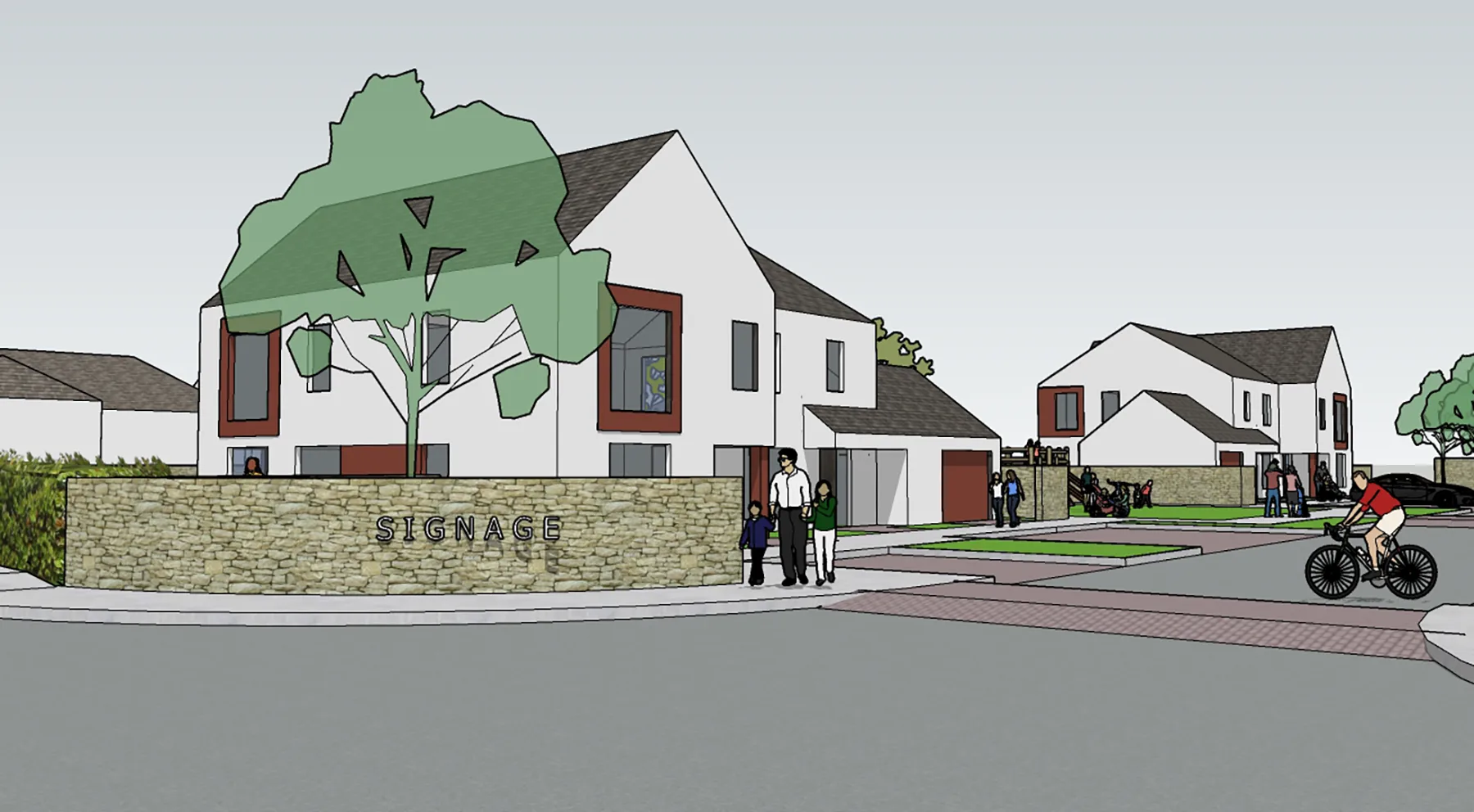
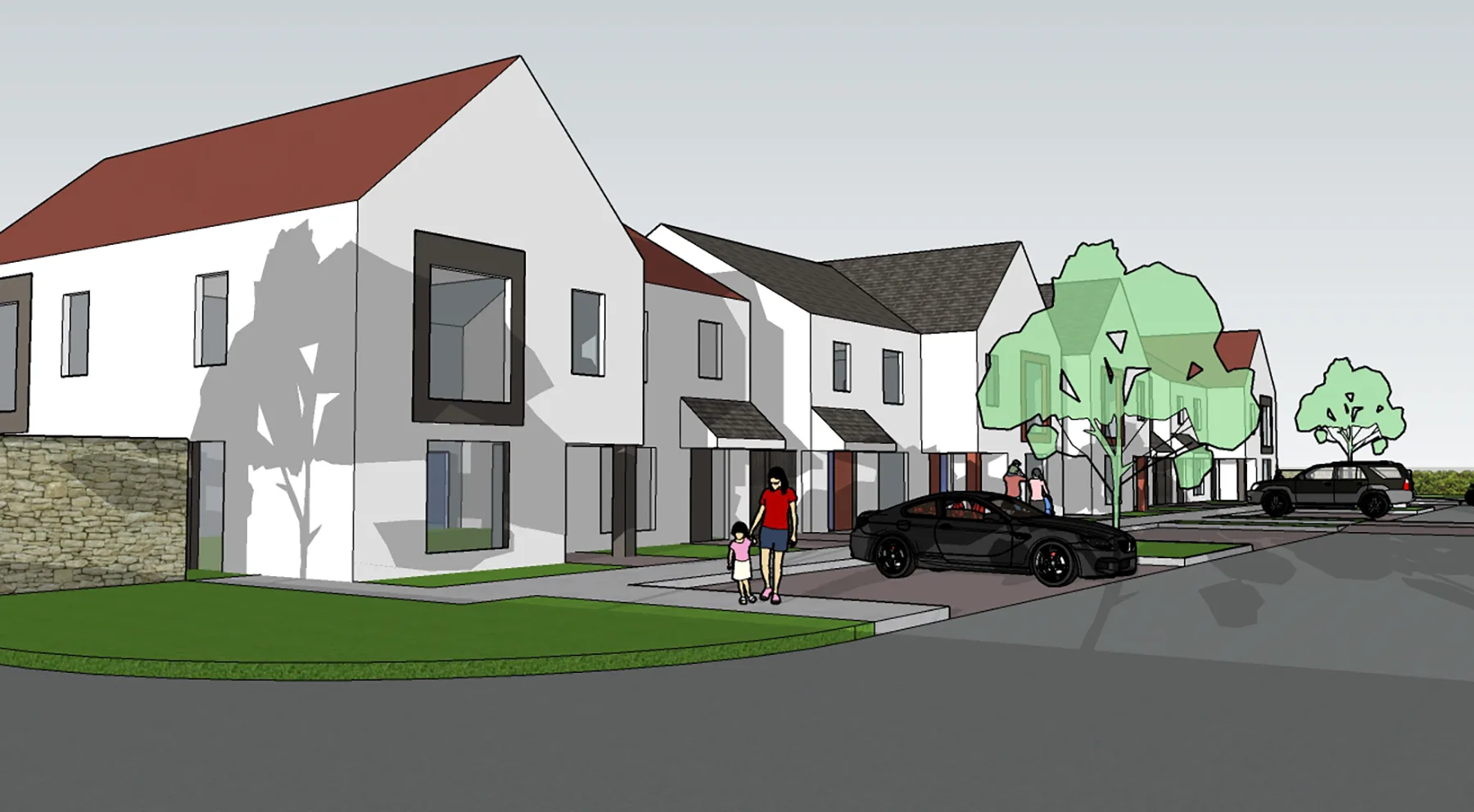
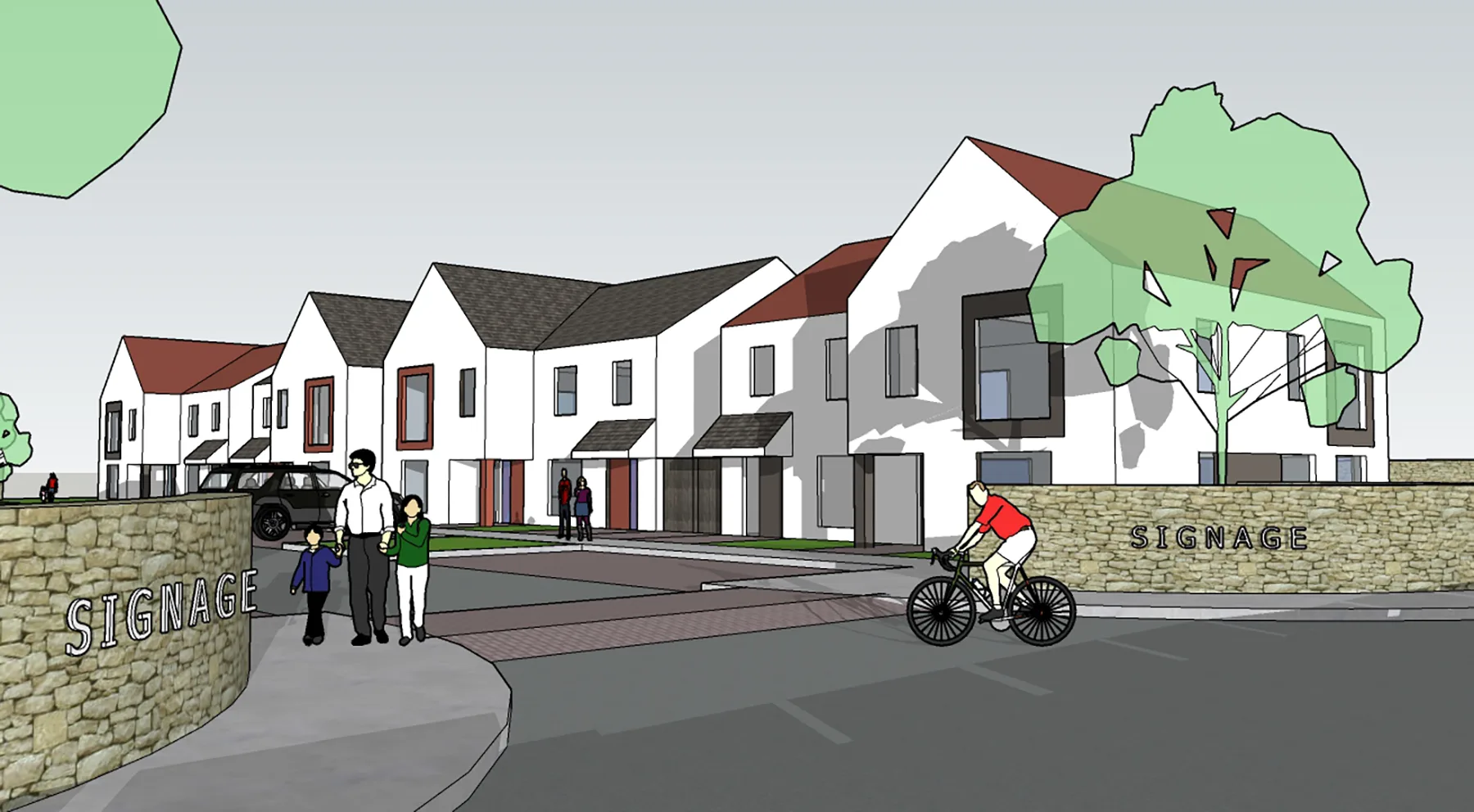
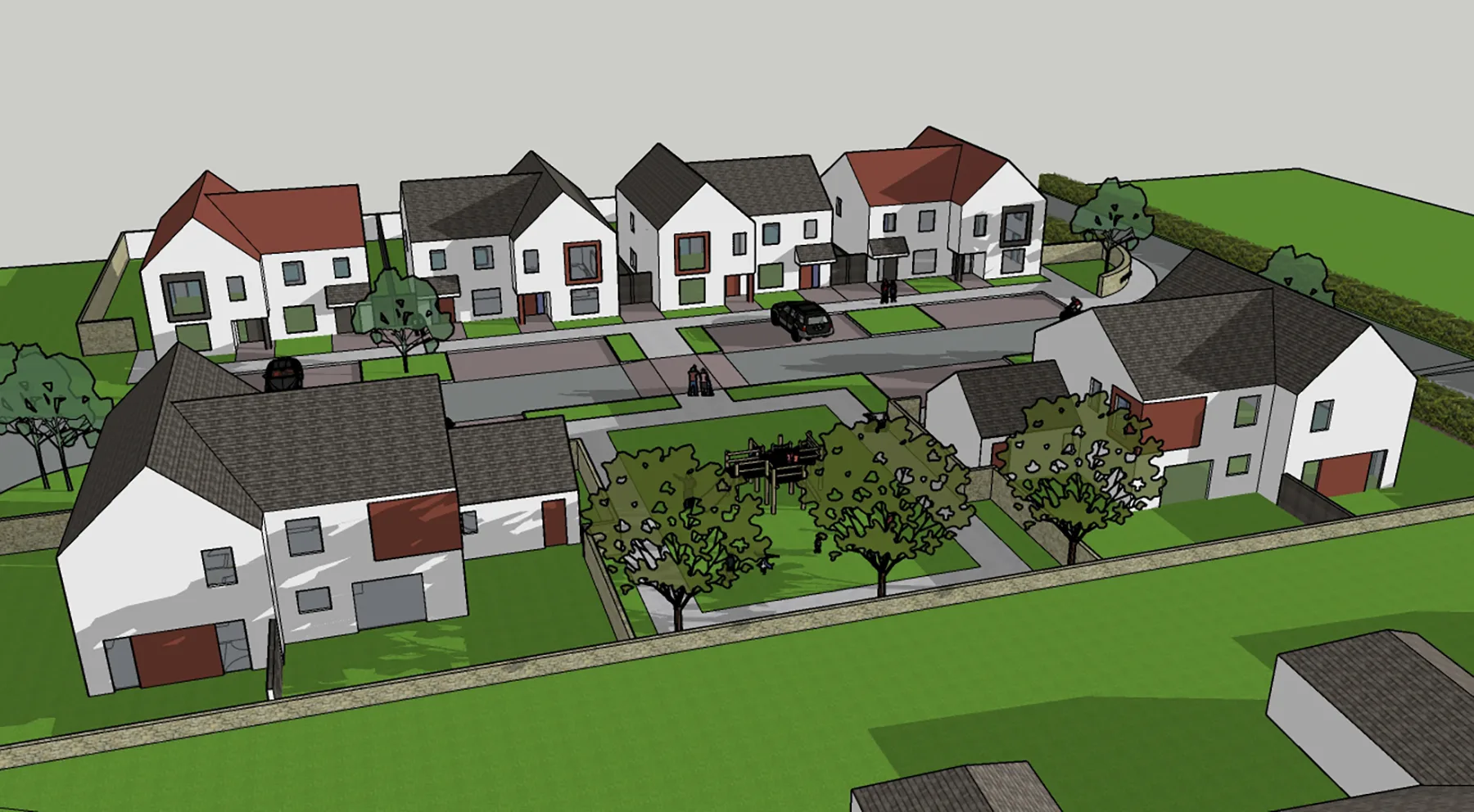
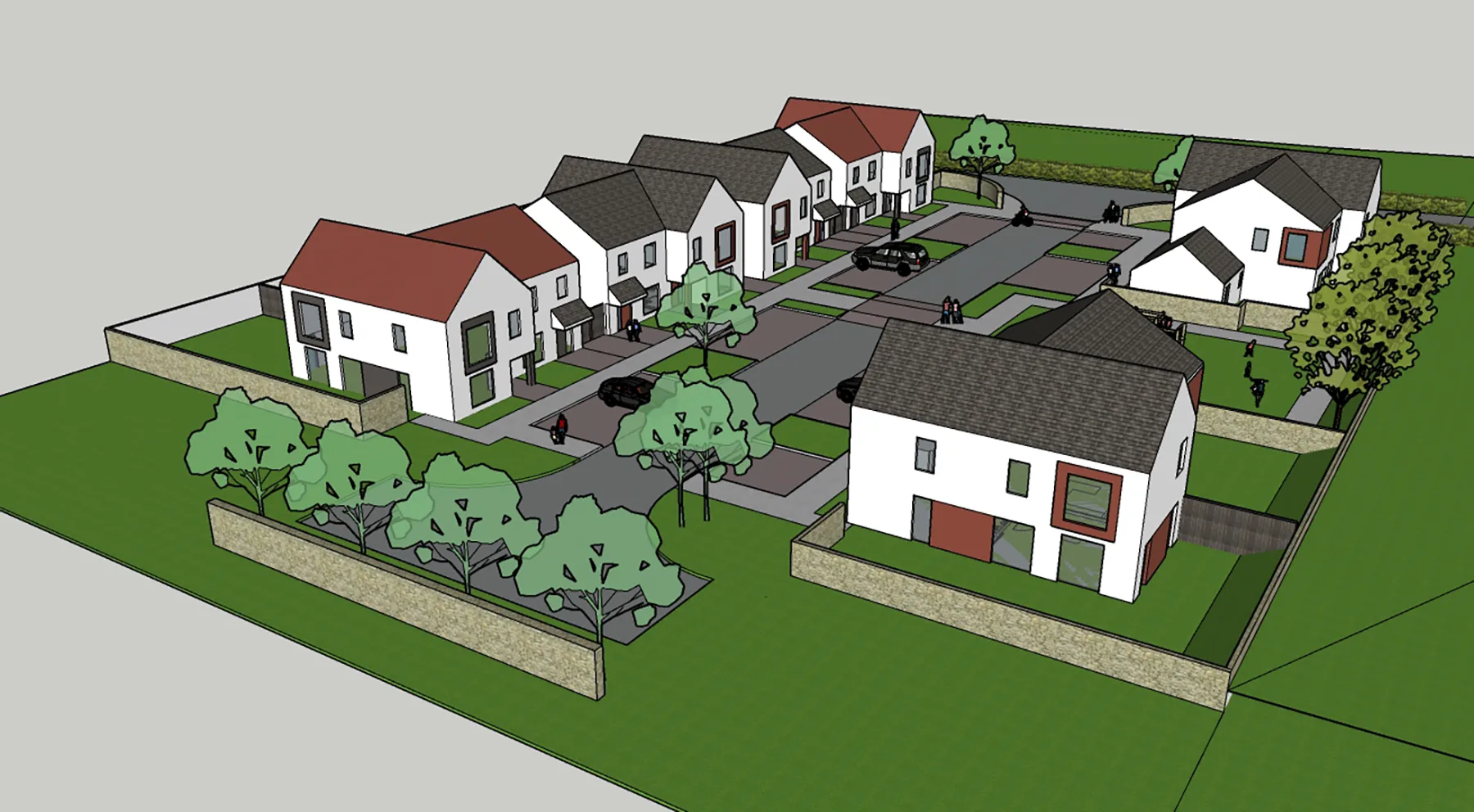
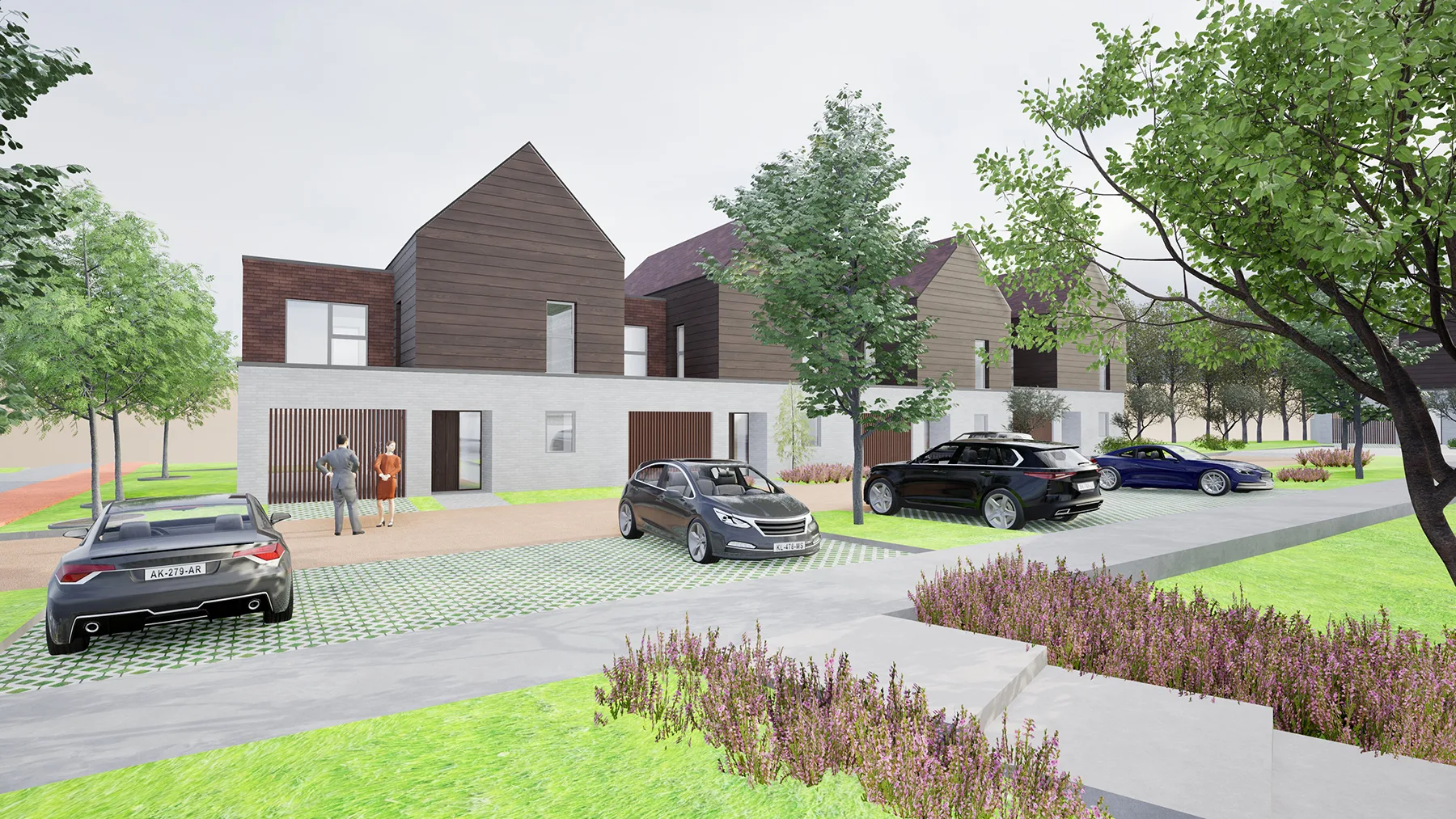
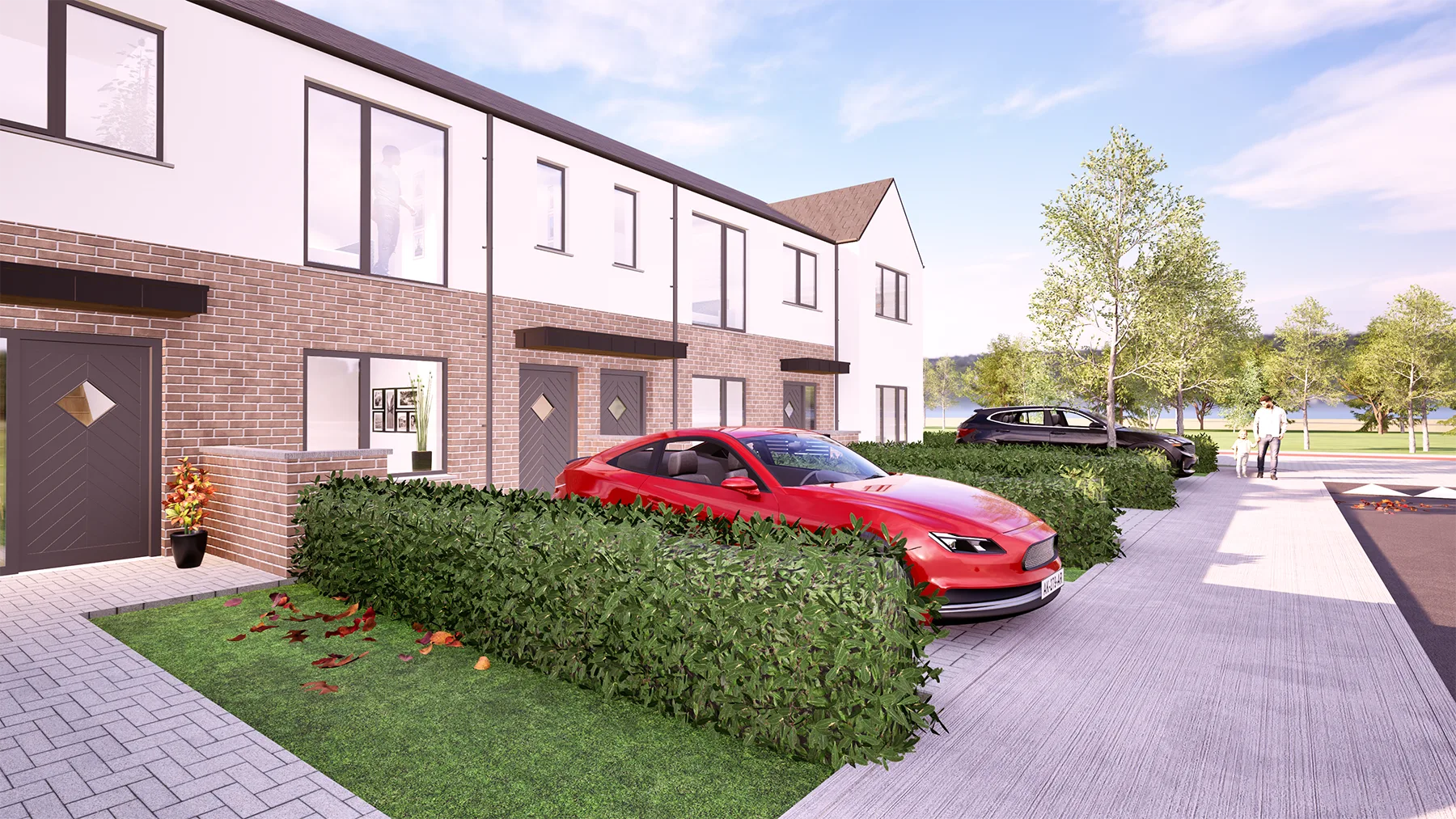
This small housing development draws on the language of the rural vernacular, reinterpreted through a contemporary architectural lens. The scheme takes cues from traditional village forms and materials, creating a calm and familiar character that sits comfortably within its setting while offering modern, well-crafted homes.
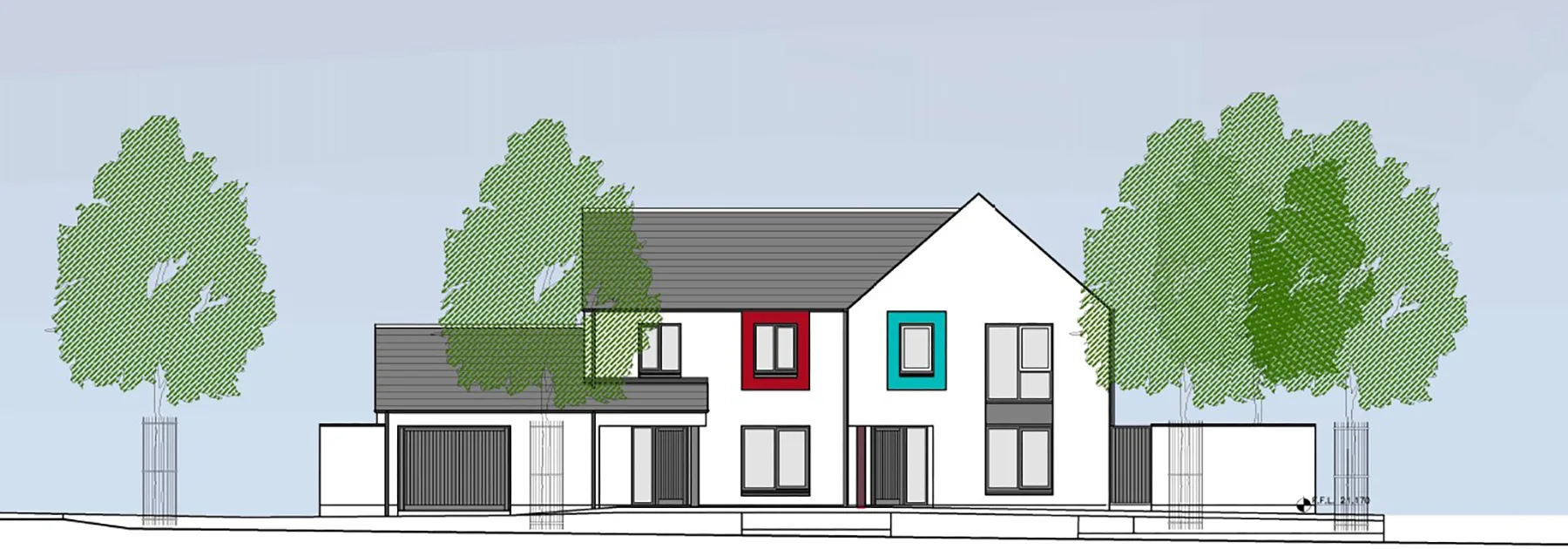
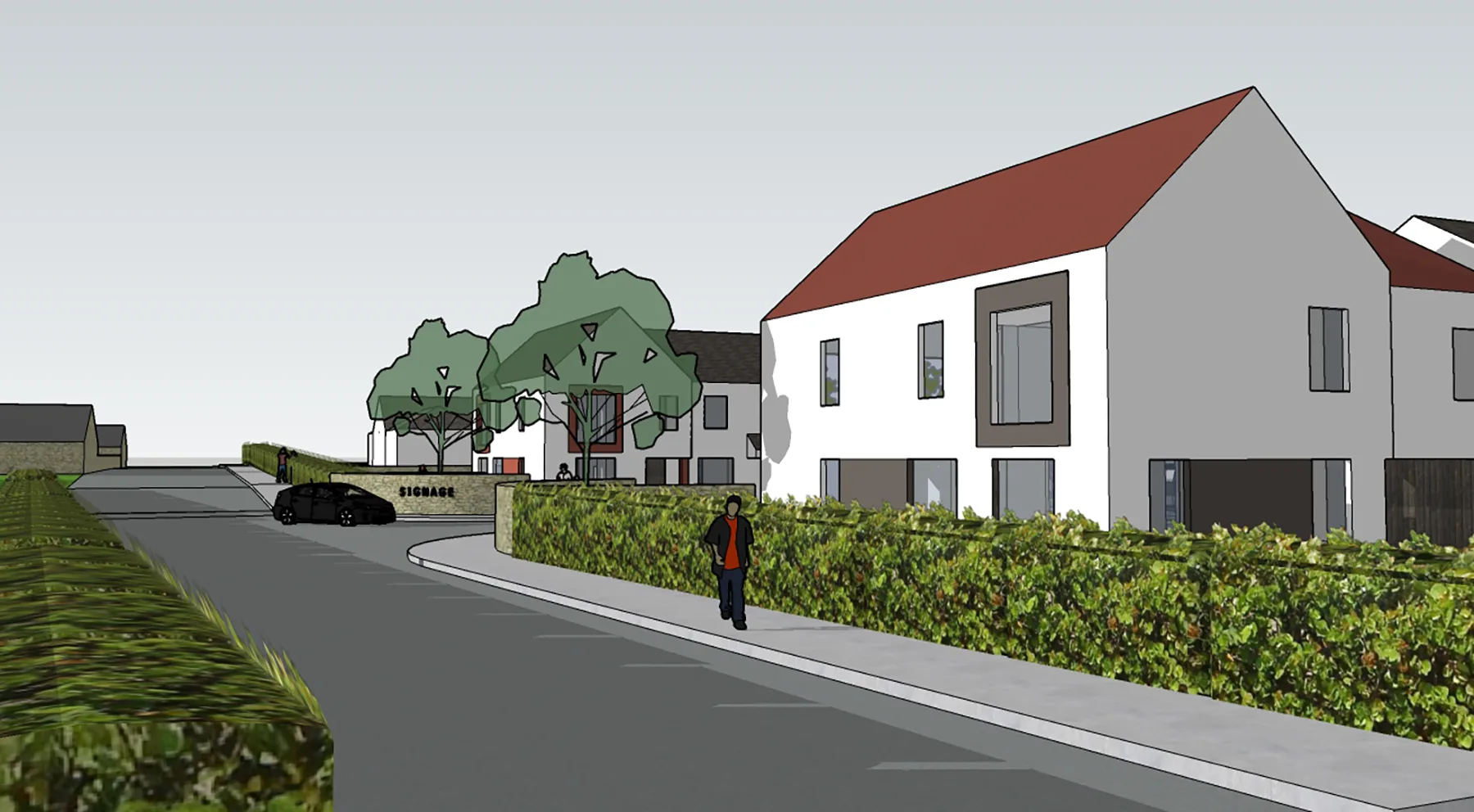
Simple building volumes with pitched roofs reference vernacular rural architecture, arranged along a shared street to echo the rhythm and scale of a rural settlement. Variation in roof orientation and façade detailing breaks down the massing and reinforces a sense of individuality, while maintaining a coherent overall identity.
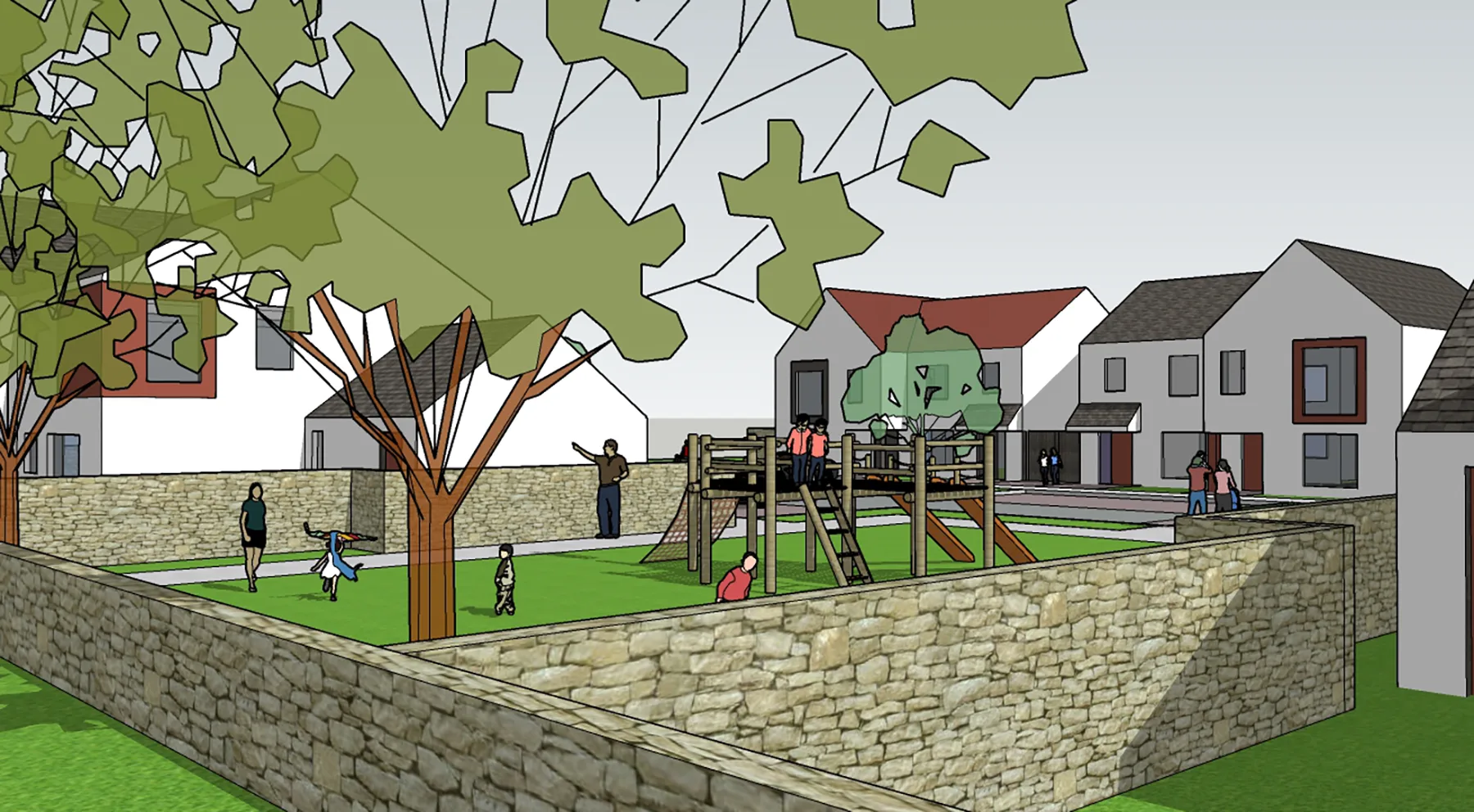
The material palette is deliberately restrained and robust. White render is paired with natural stone boundary walls and darker roof finishes, grounding the development in its rural context. Accents of muted colour around openings provide subtle contrast and help articulate entrances, adding depth and character without disrupting the simplicity of the forms.
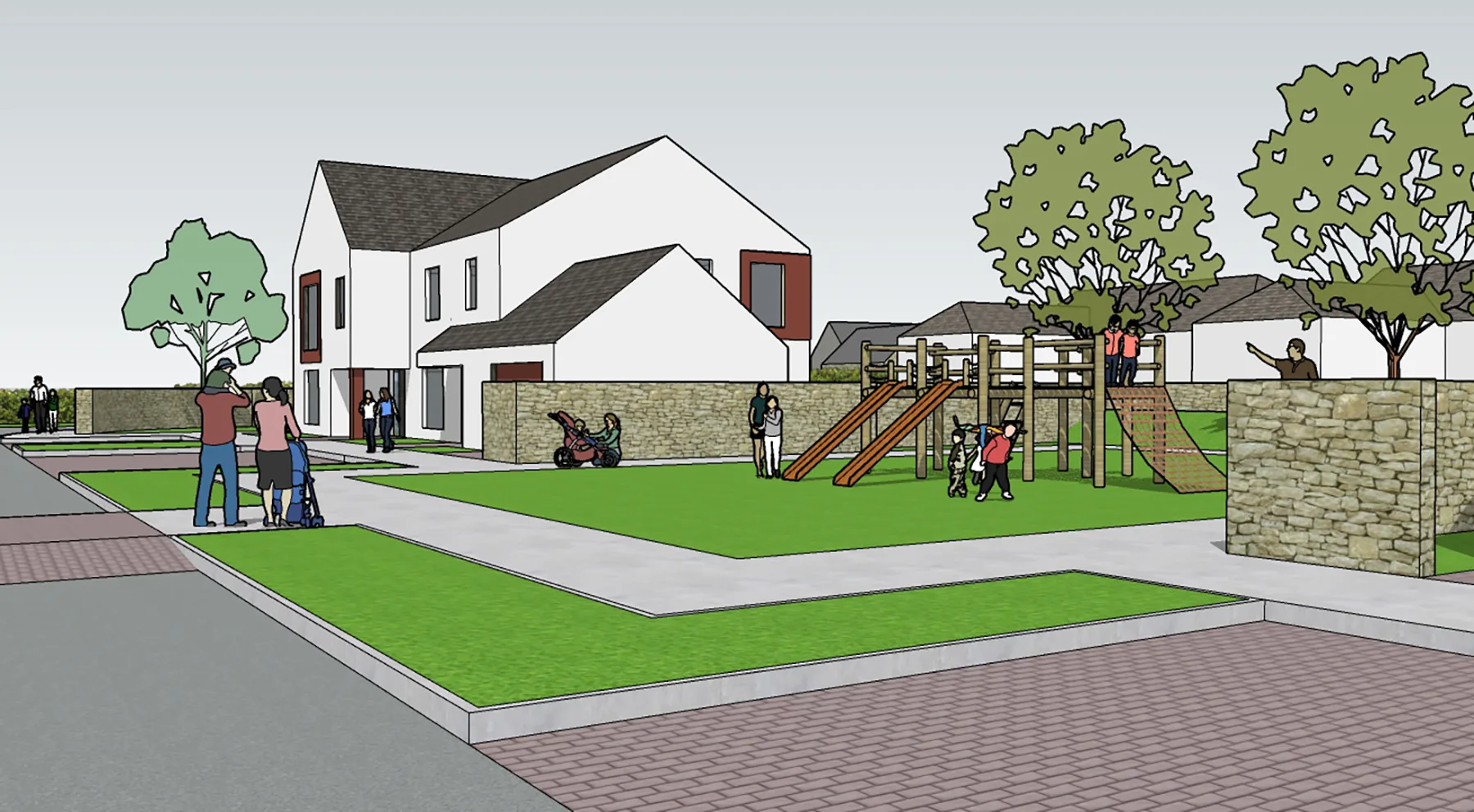
Landscaping plays an integral role in the scheme, with soft green edges, street trees, and private gardens contributing to a gentle transition between buildings and the public realm. The emphasis on pedestrian movement and shared outdoor space fosters a strong sense of community, reflecting the social patterns of traditional rural environments.
By combining familiar vernacular references with contemporary detailing and spatial planning, the development delivers a modern rural neighbourhood that is both contextually sensitive and distinctly of its time.